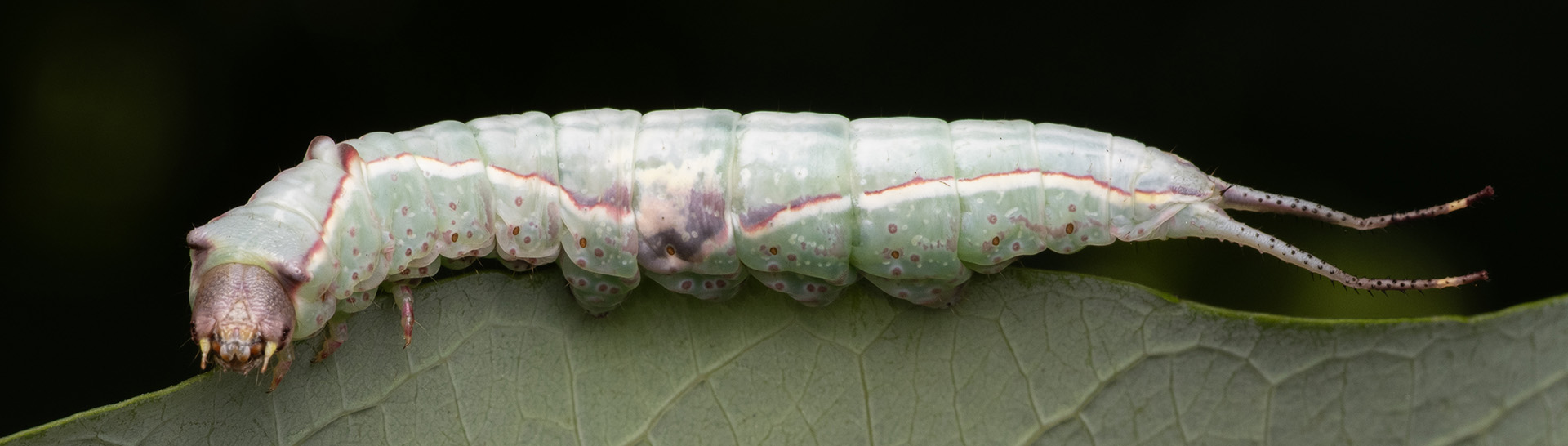
Survey Methods
While a number of techniques exist for finding caterpillars, we have found the following three best suit our needs.
1. UV Flashlights
Our main method is to go out after sunset, ultraviolet (UV) flashlights in hand, in search of caterpillars that fluoresce. Many caterpillar species fluoresce when UV light is shined on them and this fluorescence is much easier to see in the dark.
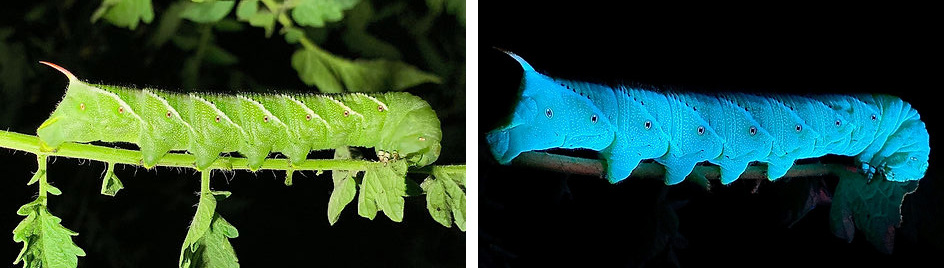
Photos: Sourav Ghosh
2. Visual Searches
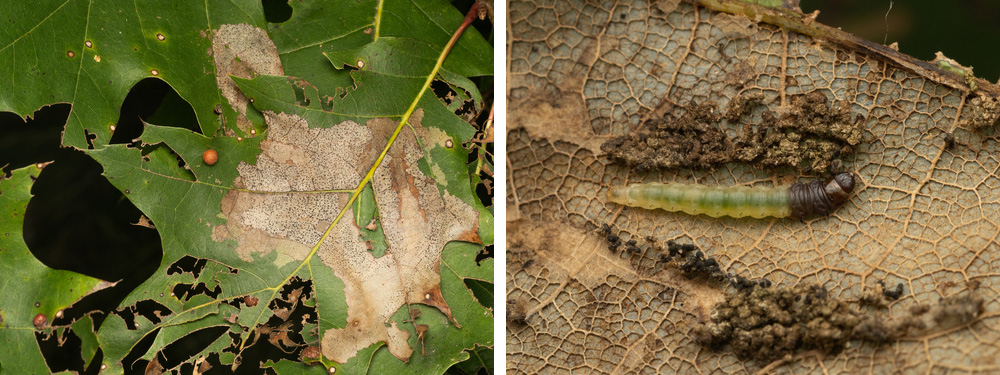
We also conduct daytime sessions to search for caterpillars that feed externally on leaves or other plant parts, within leaves or other plant parts (the former are called leafminers, the latter are called borers), or that manipulate leaves in various ways to create shelters (leaf rollers/folders/tiers). On rare occasion, we have found caterpillars that feed on other substrates, such as fungi.
Leafmines
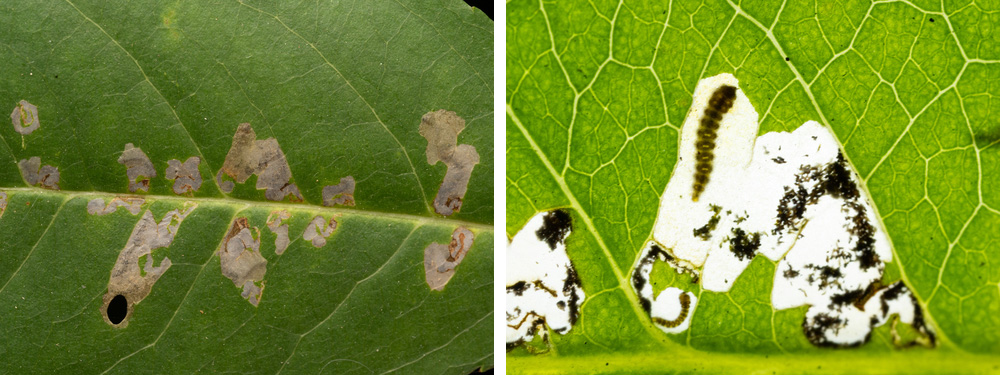
(Left image, lighted from the front) The hole on the bottom left was created by a larva which sewed the two surfaces of the cut-out section together with silk before dropping into the leaf litter to pupate.
(Right image, backlighted) Here you can see the structure of the mine created by the larva, as well as its frass.
Borers
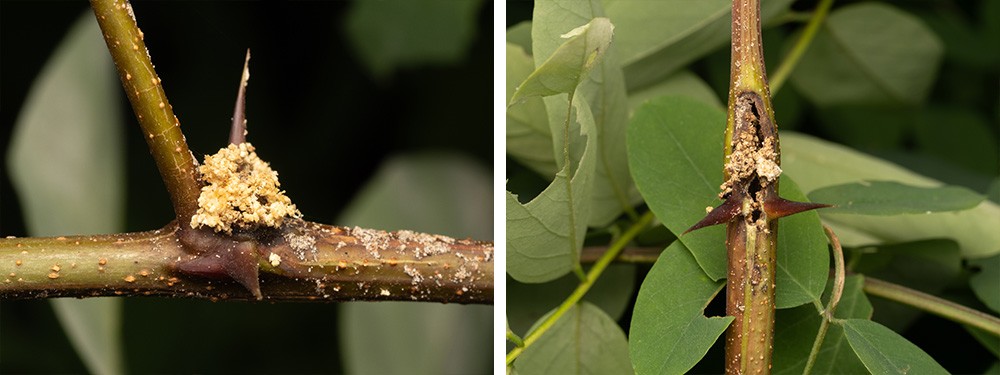
The larva lives inside the plant (a twig of a Black Locust in this case), expelling its frass from an opening as it bores its way through the plant material.
Leaf constructions
(Left image) The leaves are tied together with silk to shelter the larva while it safely feeds inside the construction. The brown sections of the leaves are where the caterpillar has eaten the inner layer of the leaf tissue.
(Right image) Notice the leaf tissue missing from between some of the leaf veins.
3. Beating Sheet
From time to time we sample vegetation using a beating sheet, either during the daytime or after sunset.