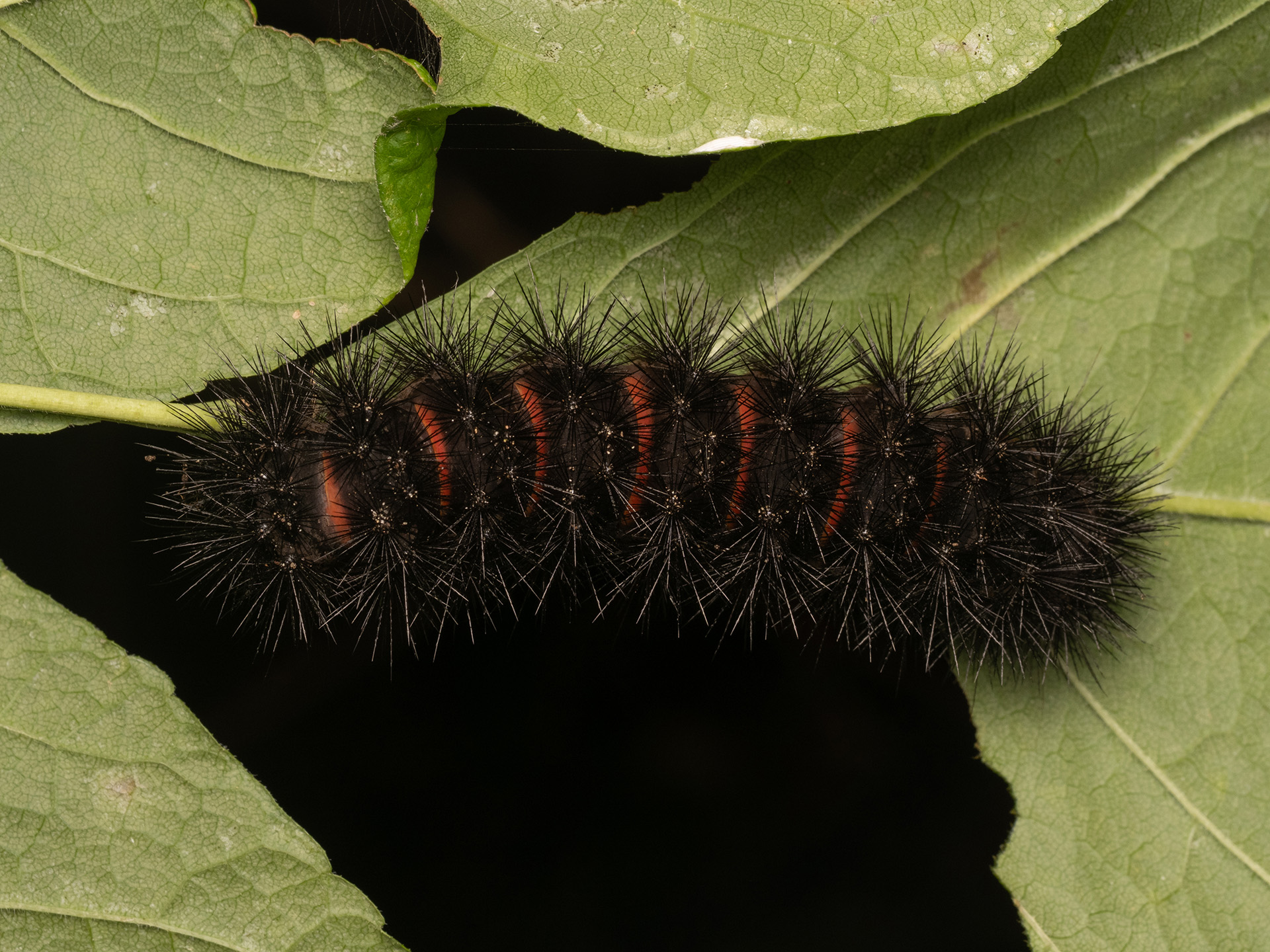
Giant Leopard Moth
During a “Supersession” on October 3, 2025, one of the two teams came up with quite a find.
Founded by long-time naturalist Richard Aaron, the survey is currently comprised of over a dozen enthusiastic volunteers, ranging widely in age and background. New volunteers are always welcome — no experience necessary. You can find more details here.
For a more in-depth history of the survey and what makes caterpillars so fascinating, click here.
As far as we know, this is the only citizen science project in North America (and possibly the world) focused exclusively on documenting the caterpillars of an urban park. If you know of any others, please let us know.
 Fringed Looper
To feature our efforts, an iNaturalist project has been created to compile a collection of the caterpillars we have found in High Park.
Click here to view our iNaturalist project.
During our 2025 season, we began paying more attention to a few other aspects of the insect larval world. Leafminers (larvae which live within the tissue of leaves) and gall formers (larvae which induce an abnormal growth of plant tissue to live within) both exhibit interesting mechanisms of defense which we feel are worth documenting.
Send all inquiries to: info@highparkcaterpillars.ca
 Brown-hooded Owlet
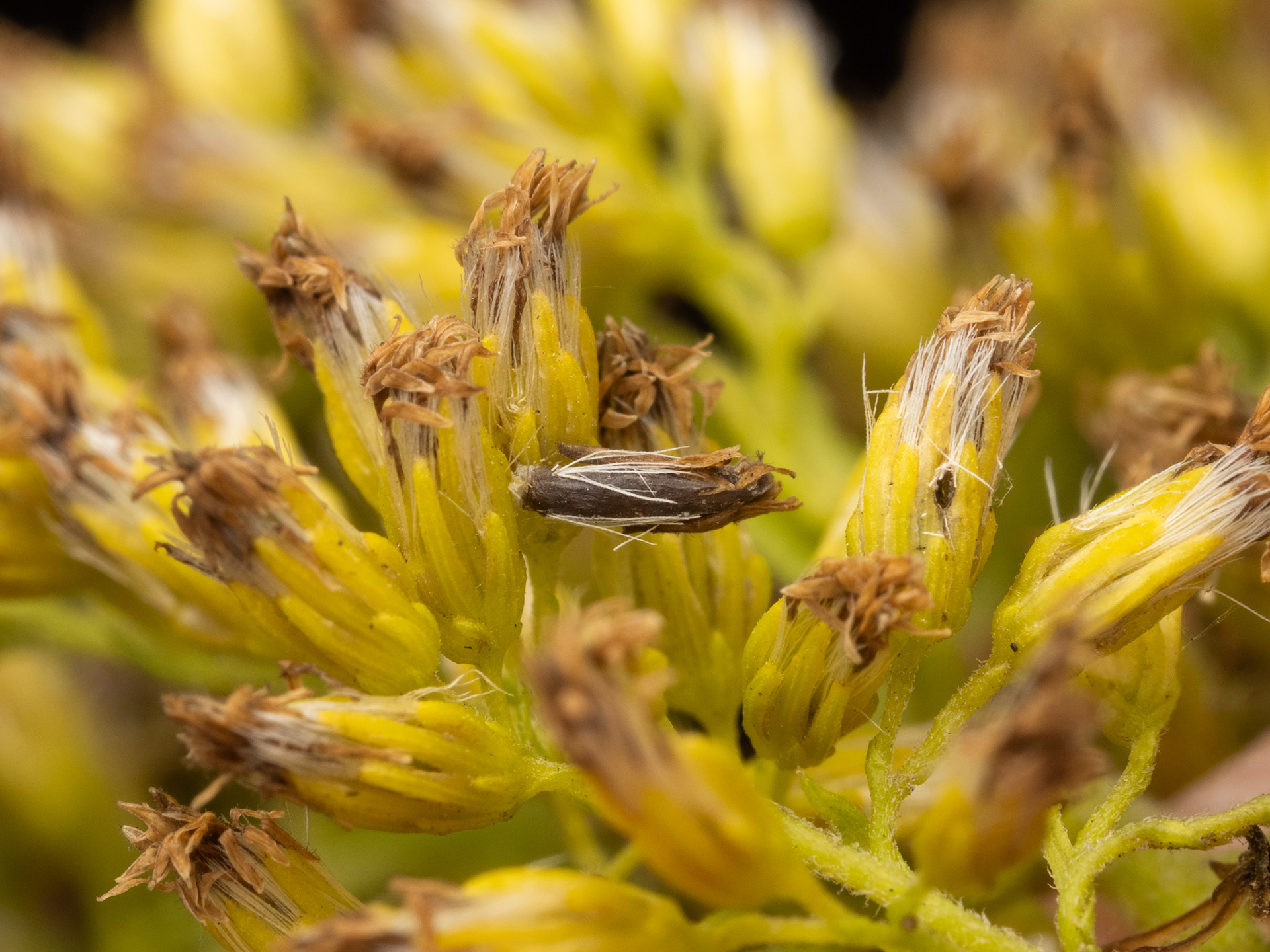
During a “Supersession” on October 3, 2025, one of the two teams came up with quite a find.
After collecting goldenrod for rearing another species, Richard noticed there was something moving along the flowers.
Oregon Cycnia caterpillars fluorescing on a dogbane plant. A typical night session for the High Park Caterpillar Survey looks something like this:
Shield-bearing moths get their name from the “shield”-shaped disc they cut from the interior of a leaf to pupate within.