First Caterpillars of the Year: Game On!
On April 3rd, we found our first High Park caterpillars of the year! The survey member who spotted them — three species in all — took advantage of the unusually warm for this time of year (reaching 23.6° C.), which encouraged some overwintering caterpillars to become active. Moths and butterflies can overwinter at any stage of their life cycle — as an egg, larva (caterpillar), pupa, or adult — depending on the specific species.
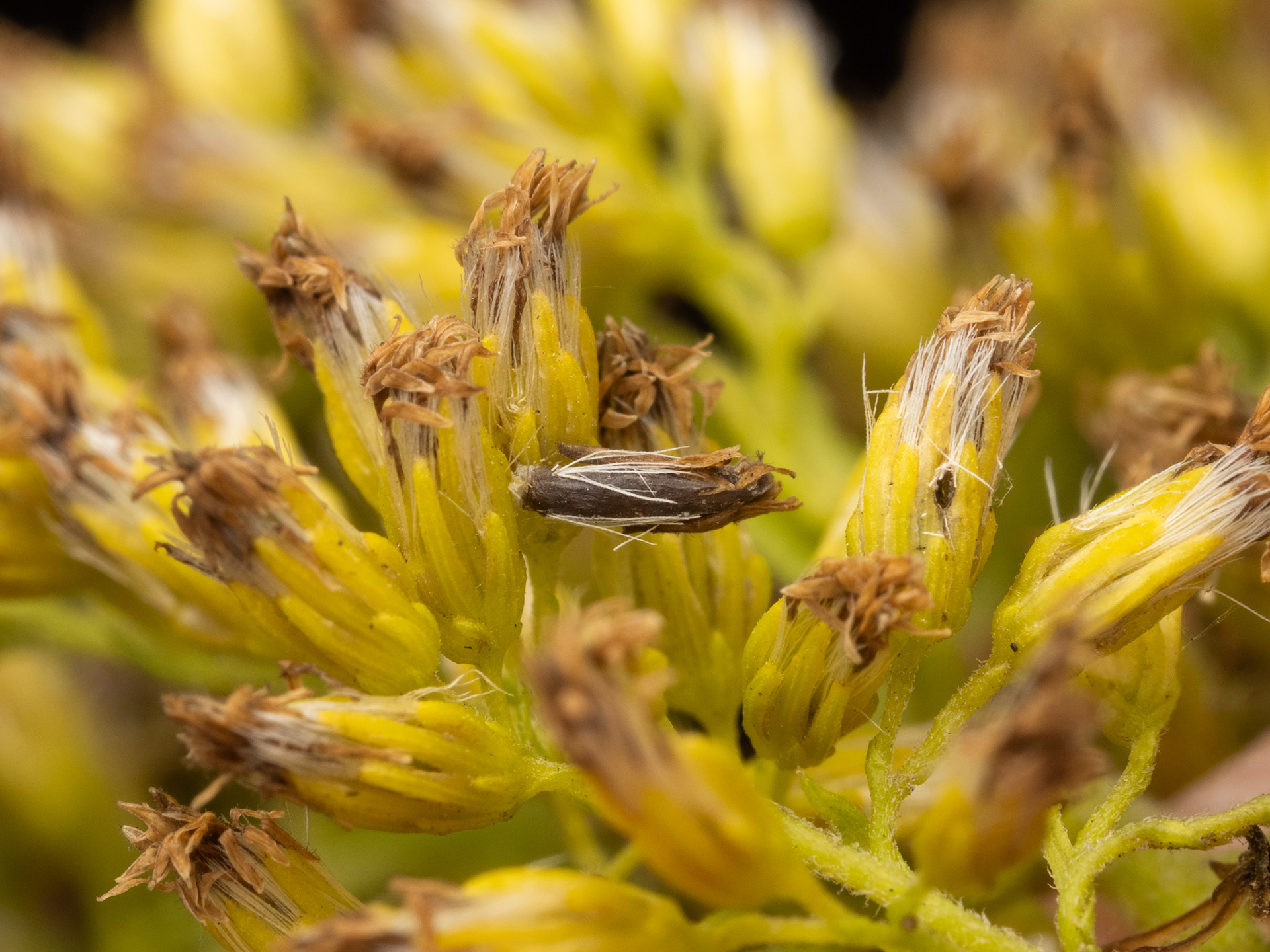
The first find was a tiny, 7-millimetre-long caterpillar feeding on lichen growing on a damp black cherry tree. This caterpillar (shown below) is part of a species complex in the genus Clemensia. Not surprisingly, they are called lichen moths. A species complex is where two or more species look the same to the naked eye. The only ways to separate them are through DNA sequencing or, in the case of moths, to dissect a male adult and examine the genitalia under a microscope — tasks our citizen science group are not equipped to perform. There are three species in this particular species complex, two of which happen to occur in our area. Thus, we are unable to determine which species of Clemensia was seen. On a positive note, it’s the first time the survey has recorded this genus, although we knew that it occurred in High Park, thanks to the High Park Moth Study. To learn more about this Clemensia species split, which occurred in 2018, check out this paper.
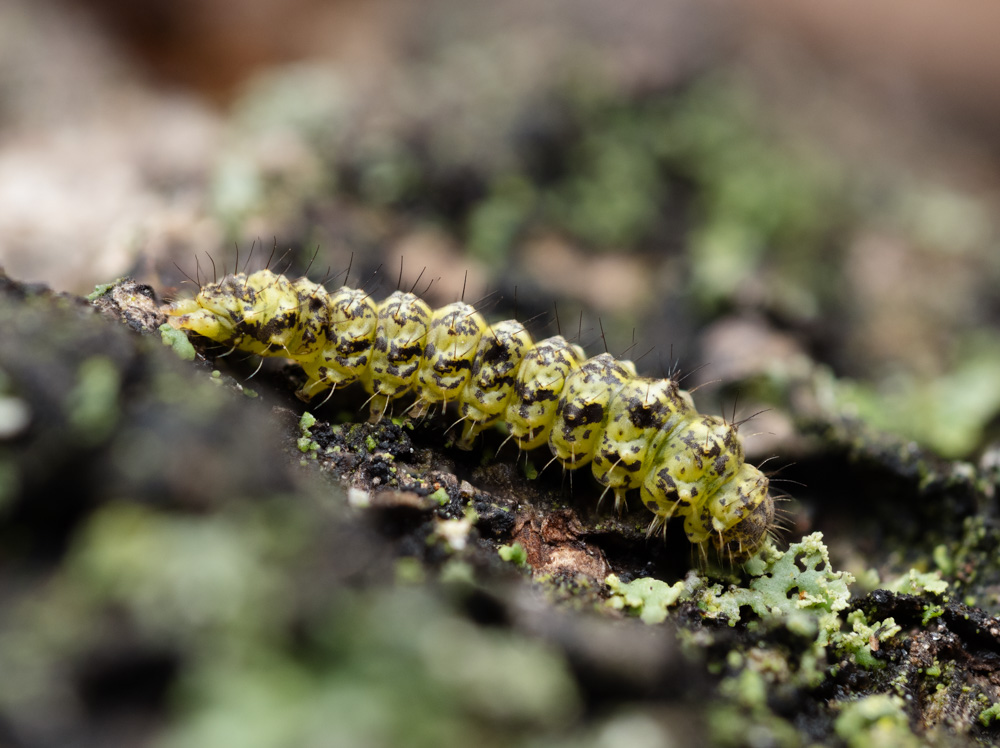
As so often happens with many species found by the survey, once a species has been seen, it shows up everywhere! In this case, another Clemensia sp. caterpillar was seen an hour later in a different part of High Park.
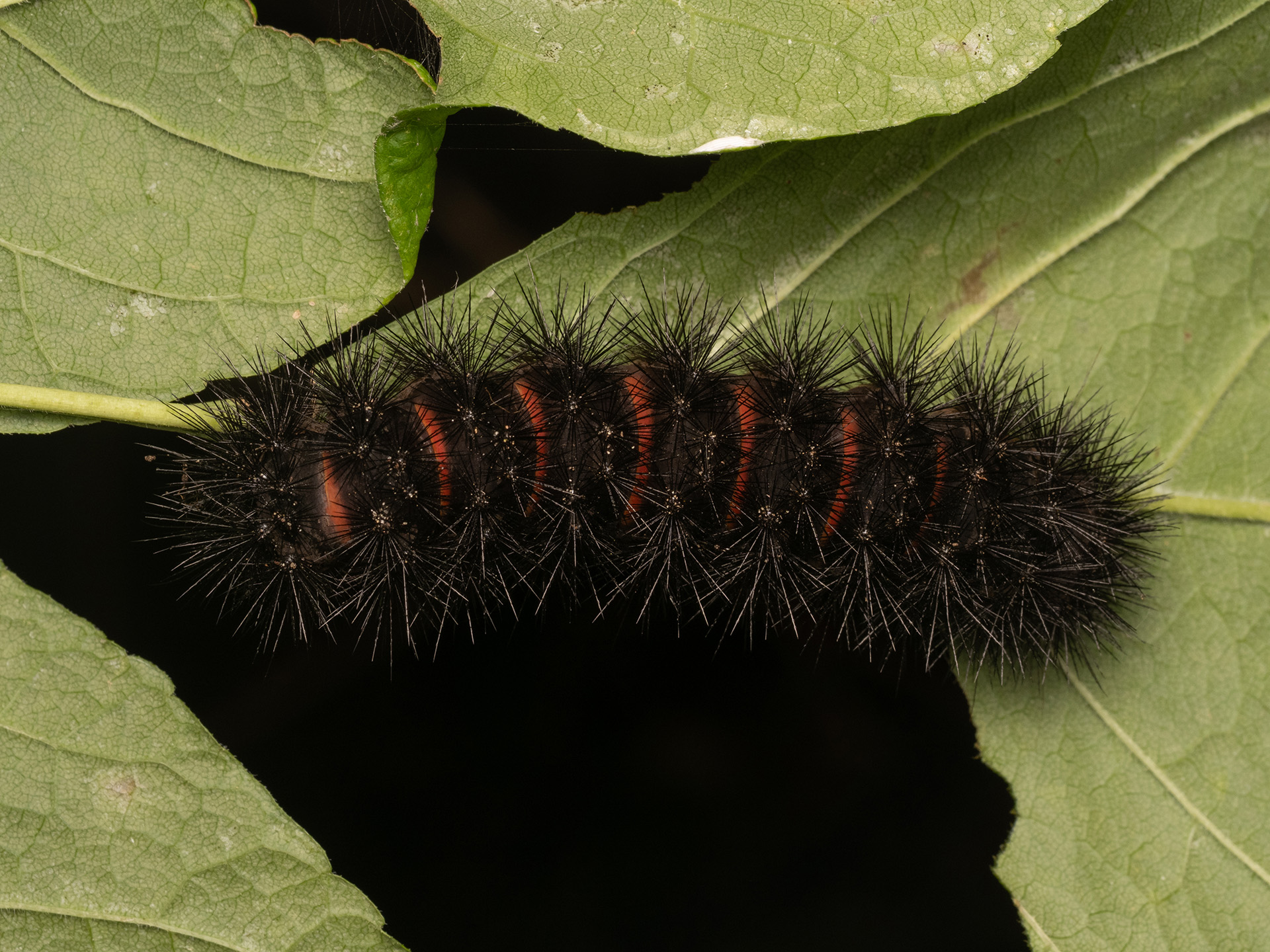
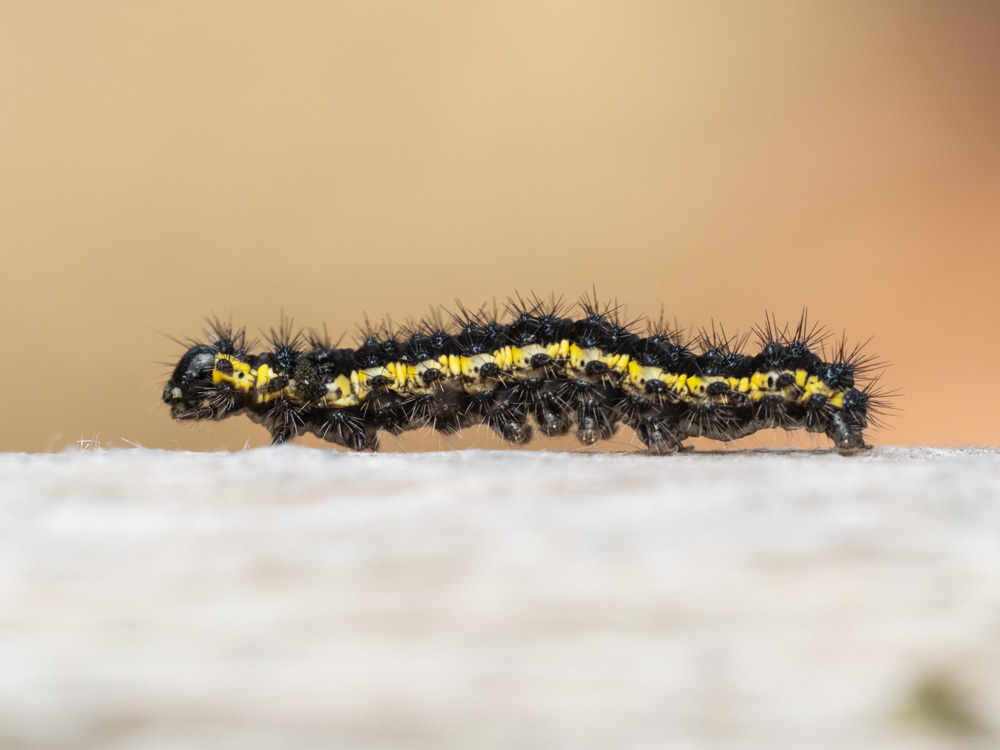
Continuing with the “when it rains, it pours” theme, up until the latter part of last season no caterpillars of the Haploa genus had ever been recorded for the survey. That changed when three Haploa caterpillars were found within a few weeks of each other. And shortly after that, we stumbled upon a Haploa hotspot: an unassuming fence railing which yielded seven Haploa caterpillars crawling along the same stretch of newly constructed wooden fence at the same time. Much to our delight, this hotspot continues to be a hotbed of Haploa activity — nearly a dozen were counted (one pictured below) along the same wooden fence the same day as the two Clemensia larvae! Haploa larvae can be a challenge to identify to species. However, if they are raised to adult moths, they can be identified visually — something that can’t be said for the Clemensia species complex.
There was a third species of caterpillar found that day, a geometer (inchworm) that we weren’t able to identify.
While the official survey sessions won’t begin until nighttime temperatures are consistently above 10°C in May, some caterpillars are already out and about just waiting to be found. Take advantage of any mild, early spring days to see what’s around. Game on!