Field Trip: Tommy Thompson Park
On Saturday, Sept 12, 2026, five survey members spent the day in Tommy Thompson Park in search of caterpillars that are uncommon or not known to be present in High Park. This was the survey’s first-ever field trip outside the borders of High Park and was a resounding success − everyone added multiple new species to their life lists with one of the species being the first Toronto record for iNaturalist.
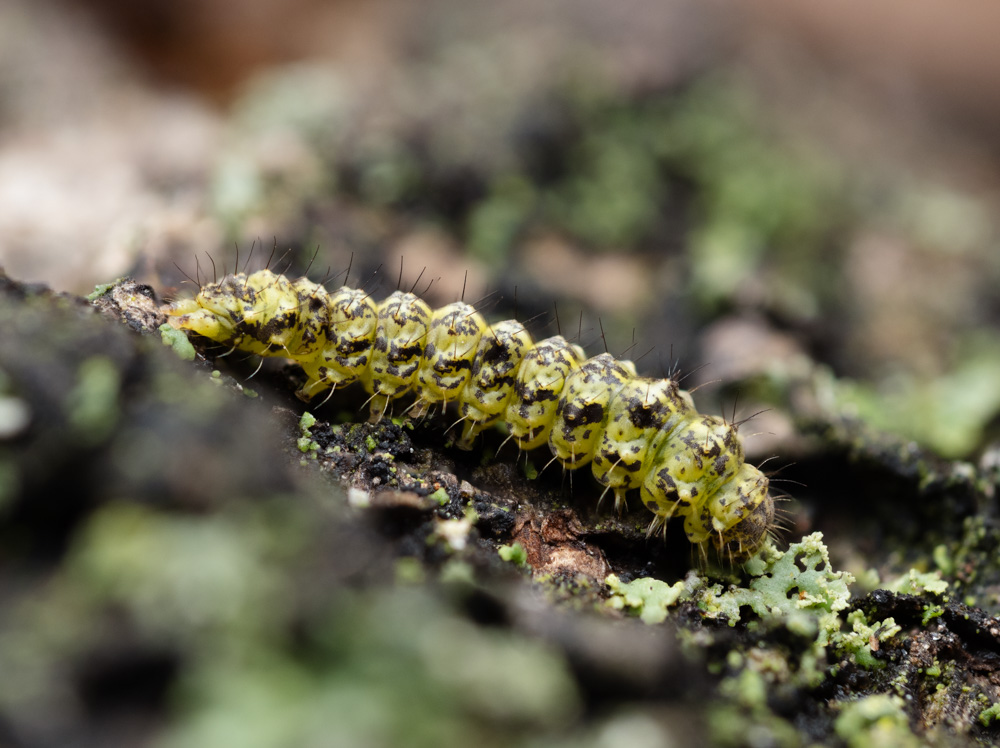
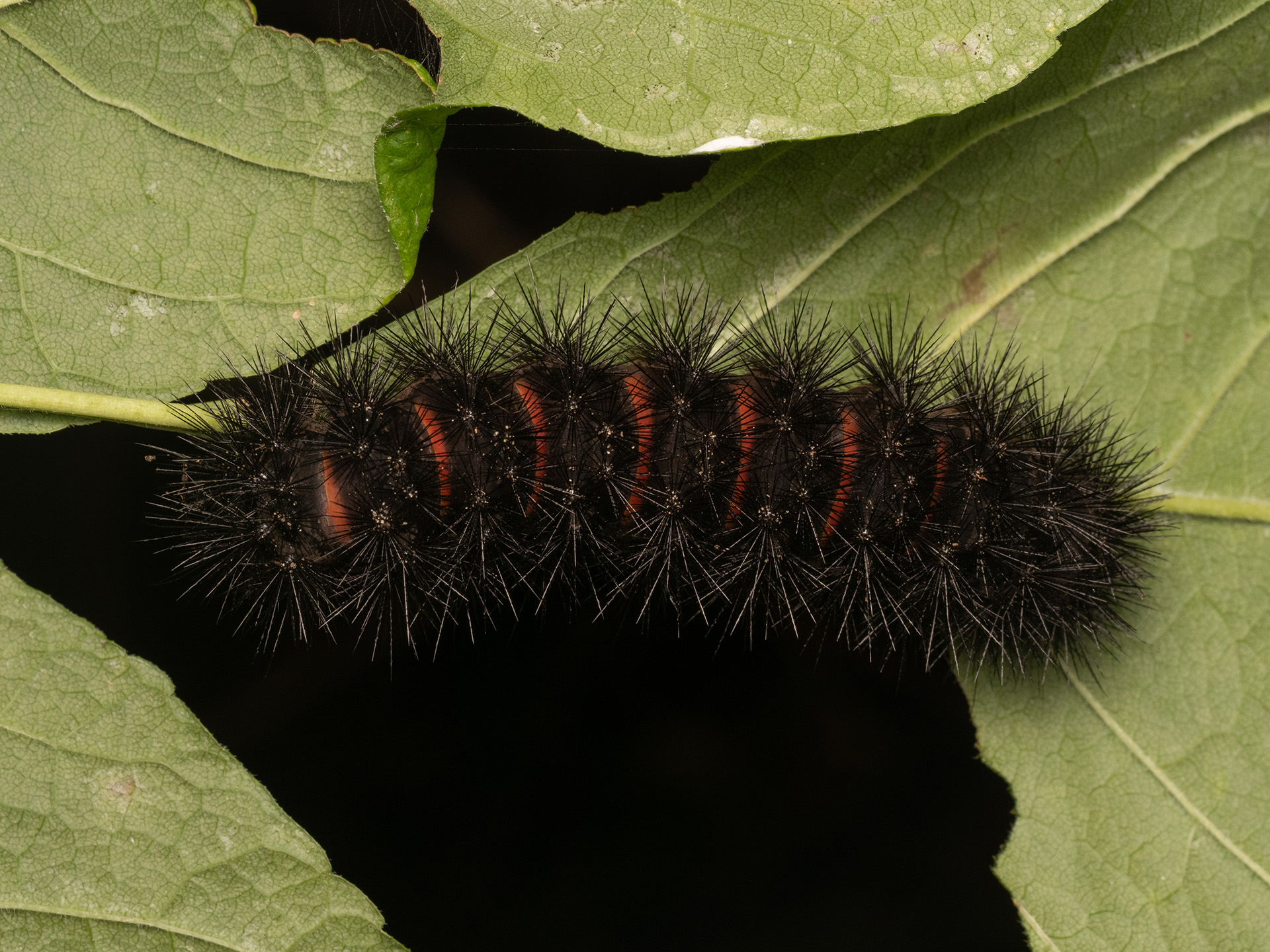
The morning started off with some familiar species that we see regularly in High Park: Hickory Tussock Moths, Poison Ivy Leafminer Moths, and Fall Webworm Moths. We soon came across one of our target species, the Finned-willow Prominent (shown below), still within sight of the visitor pavilion! Along this short stretch of road, we ended up finding five of this unusual-looking species.
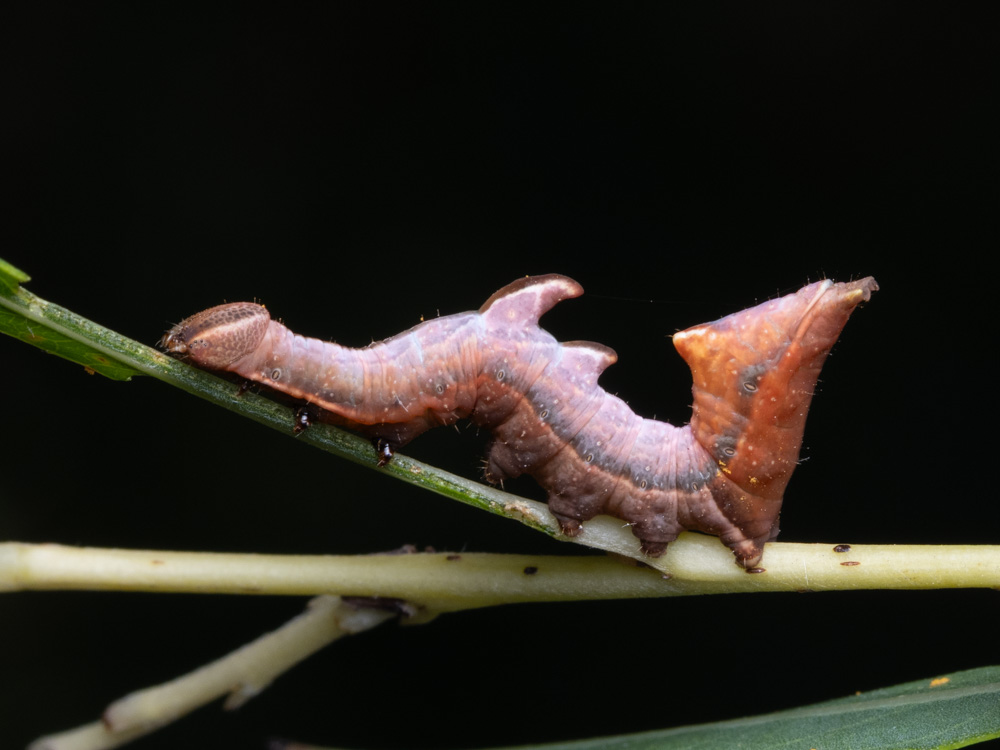 Finned-willow Prominent
The next highlight of the day was a species we only occasionally see in High Park: The Asteroid. This racing-striped caterpillar is always a crowd-pleaser. While we didn’t find any late instar Asteroids, the three middle instars we saw, although not as boldly patterned, still provided us with most of the experience.
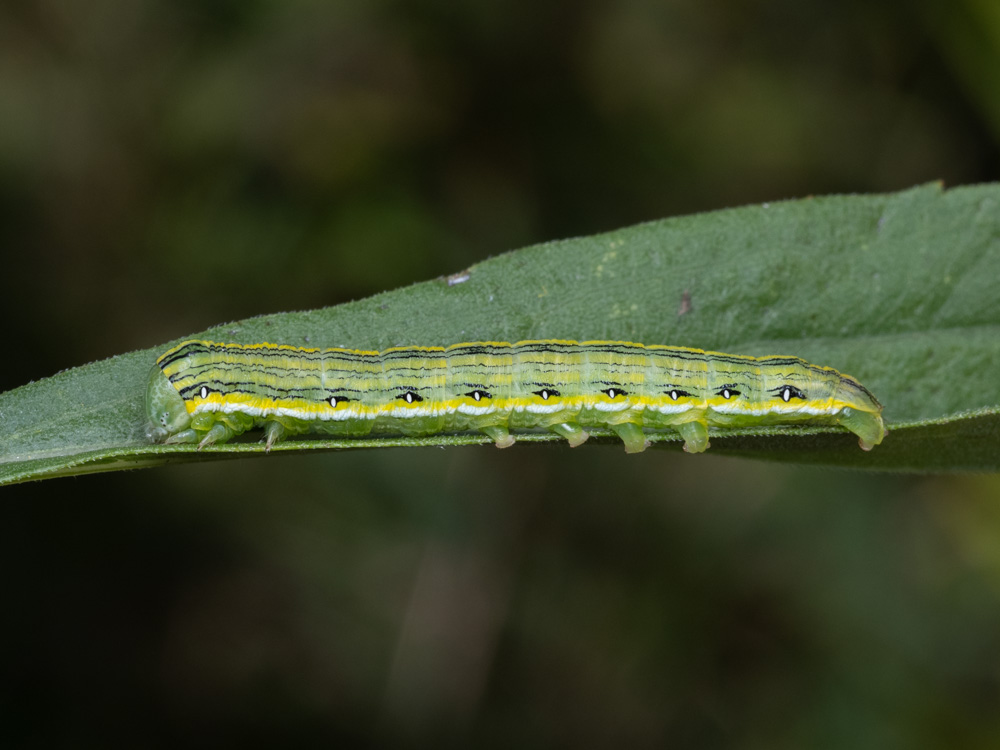 The Asteroid
Just down the road from The Asteroids, we found our second target species for the day − a small Smeared Dagger resting on a dogwood leaf. Since it was an earlier instar, it wasn’t as strongly patterned as it would be in later instars, but it was still a good find.
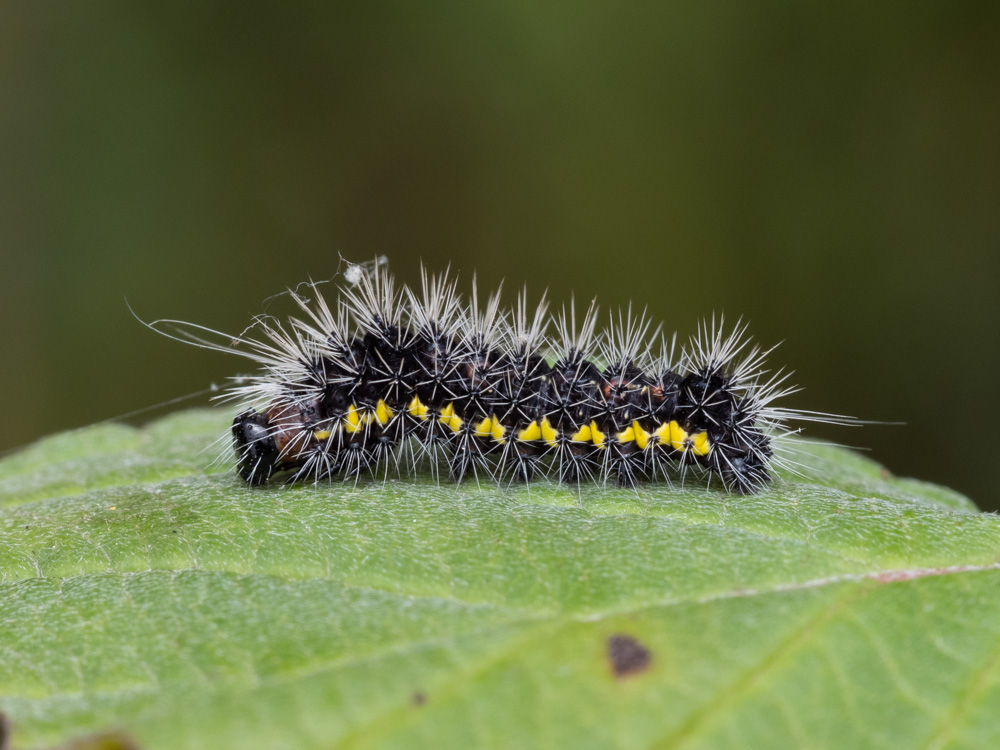 Smeared Dagger
Leaving the main road, we made our way through a meadow and onto a trail which became increasingly overgrown. We soon came to a large clearing, where one of our group spotted a Mourning Cloak caterpillar about to pupate on a large boulder. A Siberian elm (a host plant for this species) was on the other side of the boulder and likely where this Mourning Cloak larva had been feeding, so we checked the tree for more. But instead, we found two caterpillars of a different species − the Question Mark! Not only was this another species for the day’s growing list, but it was a “lifer” for all but one of us. One of the distinguishing features of the Question Mark larva is a pair of dark, spiny “horns” on the top of its head. But for whatever reason, one of our caterpillars was lacking these “horns”. Fortunately, there were other distinguishing features that helped us identify it.
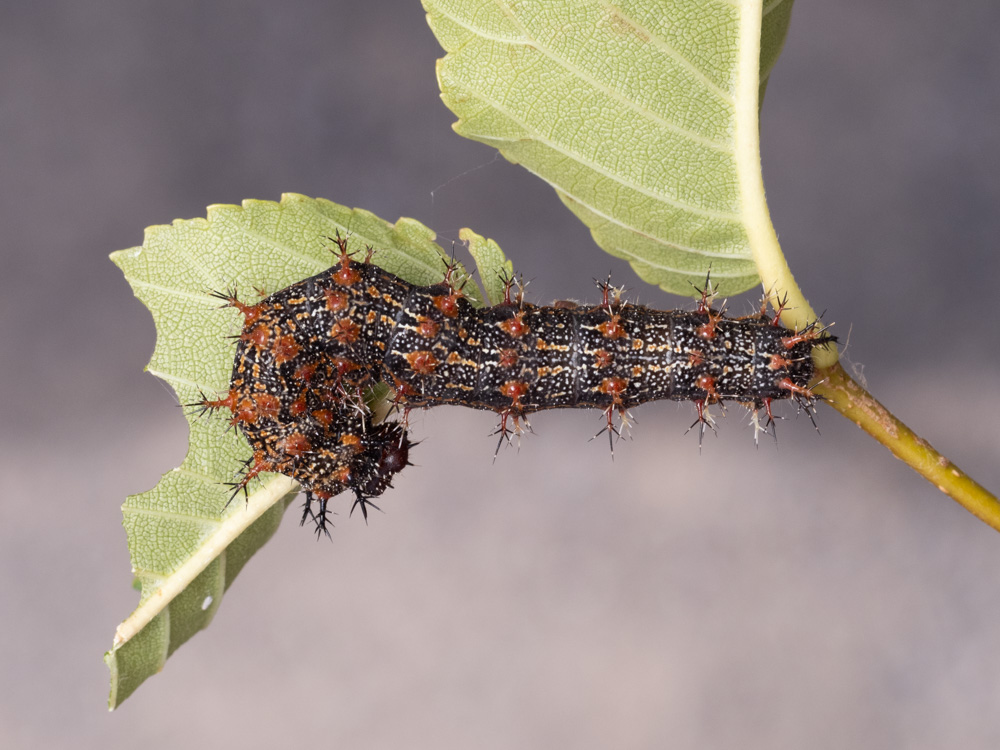 Question Mark
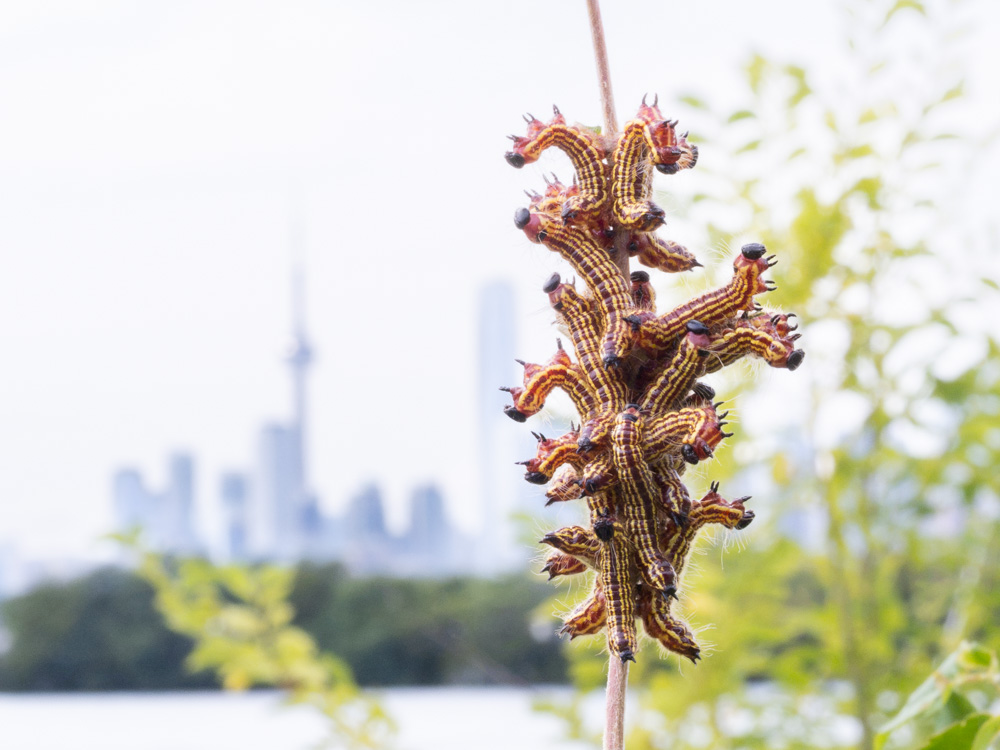
While most of the group was observing and photographing the Question Marks, another member of our team spotted our last target species for the day: a pair of Spotted Datanas! In the excitement of the discovery, we almost didn’t notice a larger group of about twenty individuals just a few small branches away. This species is known for its gregarious gatherings, which we were all hoping to see.
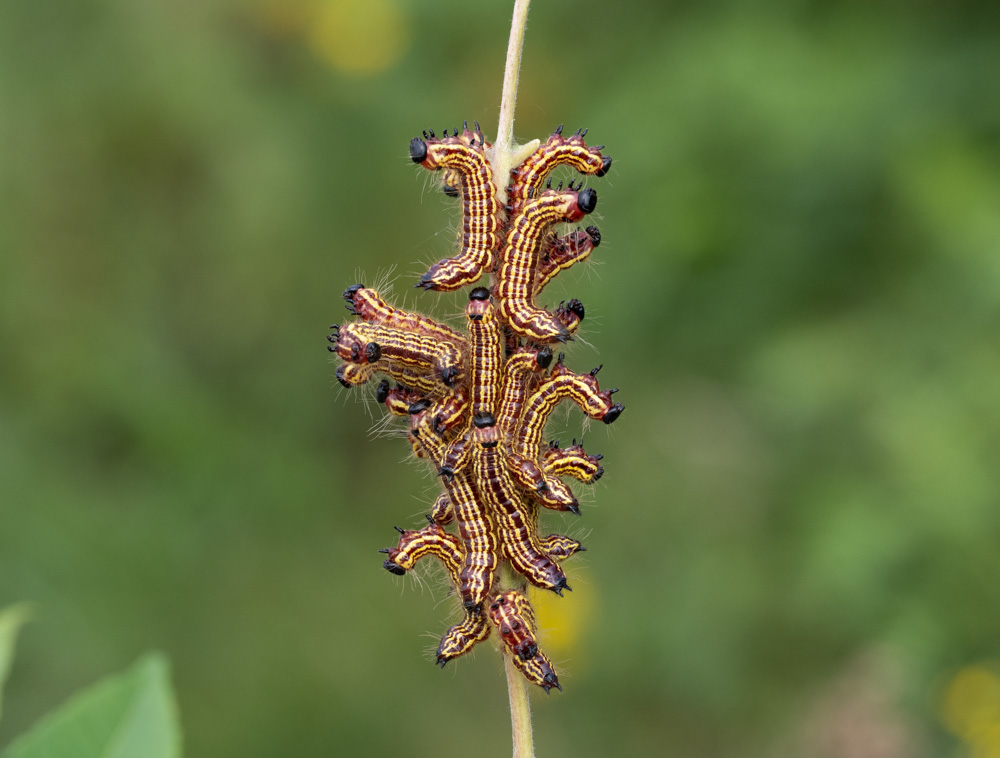 Spotted Datana
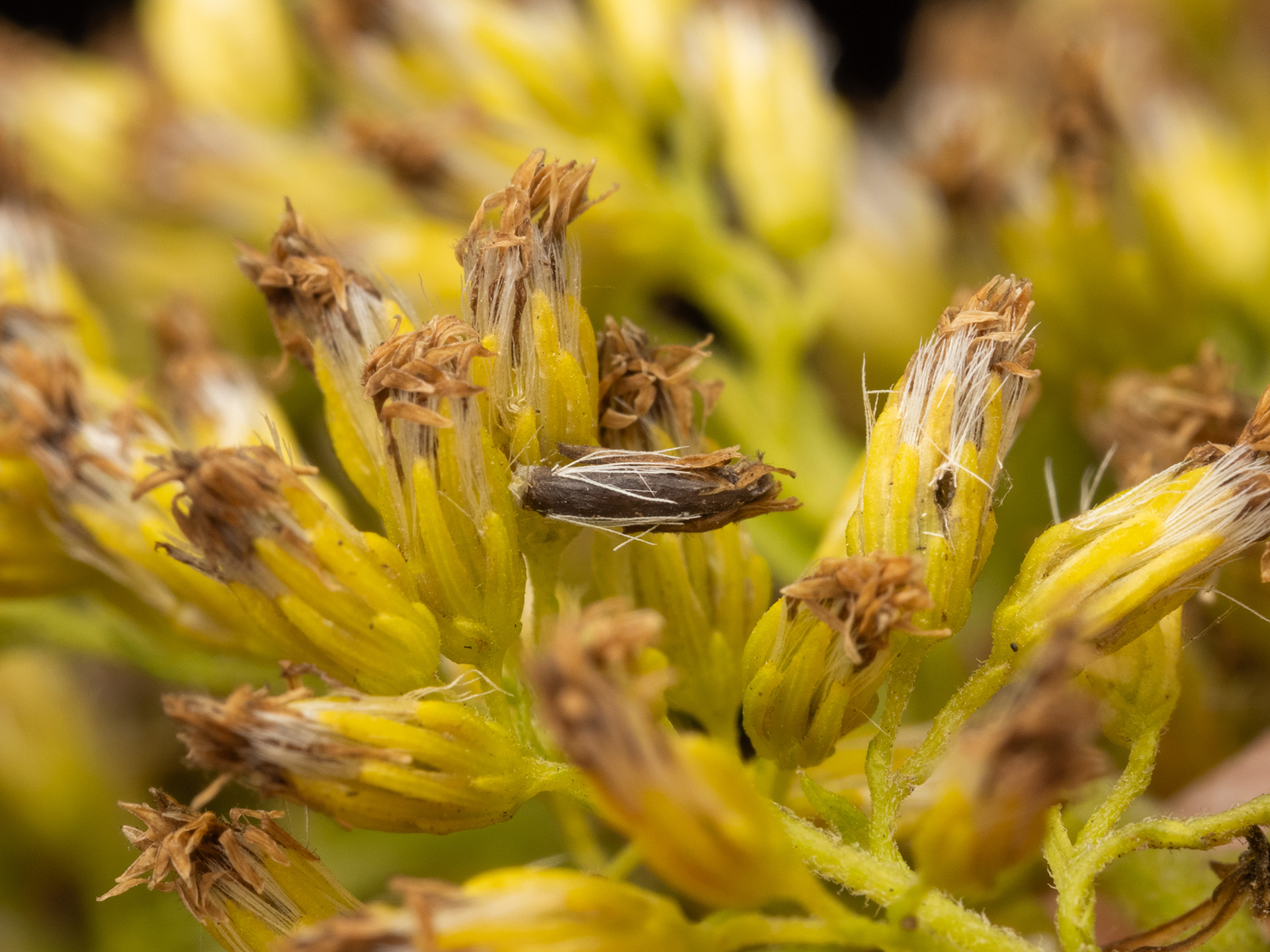
On our walk out of the park, we came across a leaf-construction on staghorn sumac that housed a species never before reported in Toronto: Striped Sumac Leafroller (Sciota subfuscella).
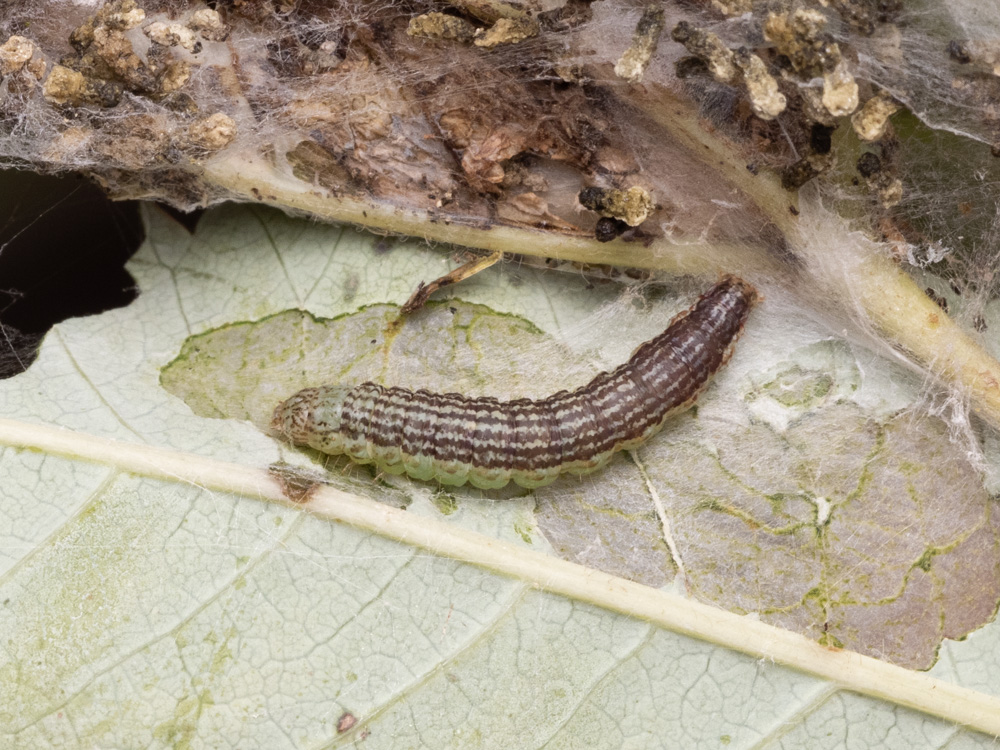 Striped Sumac Leafroller
Great weather, great caterpillars, and great company made it a very enjoyable field trip. In all, we saw 542 caterpillars of 29 species.
Here is the complete list of species we found that day:
- Banded Tussock Moth
- Blackberry Looper
- Camouflaged Looper
- Carrot Seed Moth
- Common Pug
- Fall Webworm
- Finned-willow Prominent
- Hickory Tussock
- Large Gray Dagger
- Milkweed Tussock Moth
- Monarch Butterfly
- Mourning Cloak
- Poison Ivy Leafminer
- Polyphemus Moth
- Purple Carrot-seed Moth
- Question Mark
- Red-spotted Admiral
- Salt Marsh Moth
- Scarce Straw Pearl
- Silver-spotted Skipper
- Smeared Dagger
- Spotted Datana Moth
- Striped Sumac Leafroller
- Sumac Leaf Blotch Miner Moth
- The Asteroid
- White-marked Tussock Moth
- Willow Leafcone Caterpillar Moth
- Woolly Bear
- Yellow Bear